
Skilled people doing clerical work
Qualified staff spend their week re-keying between systems, chasing approvals and assembling the same weekly pack. The cost is not the hours — it is the judgement work those hours displace.
↑↓ move · ⏎ open · esc close

Consulting · Agentic AI
An AI agent is only worth deploying if you can say what it may do, what it must never decide alone, and how you would prove what it did. This consultation answers all three before a line of code is written — then hands you the roadmap.
What is agentic AI?
The distinction is not model quality — it is reach and accountability. An agent can retrieve from your records, reason over what it found, call approved tools in your systems and complete multi-step work. Which is exactly why the permission model matters more than the prompt.
See how we engineer themThe problem worth solving
Qualified staff spend their week re-keying between systems, chasing approvals and assembling the same weekly pack. The cost is not the hours — it is the judgement work those hours displace.
The answer to a policy or history question depends on asking the right colleague before they go on leave. Nothing is wrong with the documentation; nobody can find the relevant paragraph fast enough to use it.
Rule-based automation handles the happy path and dumps everything else into a queue nobody owns. The exceptions are exactly where the business judgement lives.
Where agents fit
Every one of these is a narrow, permission-bound helper attached to work your team already does weekly — not a general assistant looking for a purpose.
Preparation without loosening a single control.
Reconciliation preparer
Matches statement lines to ledger entries, drafts the journal for the breaks it cannot clear, and leaves the posting to a human.
Invoice triage agent
Reads incoming supplier invoices, matches against PO and receipt, and routes only the variances to a person.
Close assistant
Tracks the close checklist, chases the owners of open items and assembles the management pack from posted data.
Guardrail. No agent posts to the ledger, releases a payment or changes an approval limit.
Context assembled before the approver opens the request.
Requisition briefer
Compiles prior pricing, vendor history, budget position and comparable purchases into one brief attached to the request.
RFQ comparator
Normalises supplier responses onto one comparison and flags the terms that differ from the others.
Contract watcher
Monitors renewal and expiry dates, surfaces price movement and drafts the renewal brief ahead of the deadline.
Guardrail. No agent awards business, issues a purchase order or approves a variance.
Policy answers grounded in your own handbook, not the internet.
Policy responder
Answers entitlement and policy questions strictly from your approved documents, citing the clause it used.
Onboarding runner
Drives the joiner checklist across IT, facilities and payroll, and reports what is still outstanding.
Letter drafter
Prepares confirmation, transfer and reference letters from the employee record for HR to check and issue.
Guardrail. No agent approves leave, alters a contract or communicates a decision to an employee unreviewed.
Exceptions found the day they appear.
Exception watcher
Monitors ageing, thresholds and repeat occurrences across requests and cases, then raises them to a named owner.
Job status agent
Answers "where is this?" from the operational record instead of a phone call to the supervisor.
Handover assembler
Builds the shift or project handover from what actually happened, rather than from memory.
Guardrail. No agent reassigns work outside the routing rules or closes a case on its own judgement.
The follow-up nobody had time to make.
Account summariser
Assembles the pre-meeting brief — history, open items, past pricing, service record — from your own records.
Follow-up drafter
Drafts the post-call follow-up and the next-step task, for the salesperson to edit and send.
Service triage
Classifies incoming requests, attaches the relevant history and routes to the right queue.
Guardrail. No agent quotes a price, offers a discount or commits a delivery date to a customer.
How it learns your business
A model that has read the internet knows nothing about how your organisation actually works. So we do not start with the model. We start by understanding the workflow end to end, then build a knowledge base dedicated to you — and the agent answers from that, or says it cannot.
Before a model is chosen, we sit with the people doing the work and write down how it actually runs — who raises what, which exceptions are routine, and where the approval really happens rather than where the org chart says it does.
Which documents, policies and records constitute the truth, which are superseded, and who owns each one. Contradictions get resolved with their owner at this stage, not discovered later in an answer.
Your approved material is chunked, embedded and indexed into a knowledge base built for your organisation — not a shared index, not folded into anyone else's model, and scoped so each answer respects the permissions of whoever asked.
The agent answers from that base and cites what it used. Asked something the base does not cover, it says so — the failure mode we design against is a confident answer assembled from general web knowledge.
Dedicated, not shared. Your knowledge base is yours. It is not pooled with another client's, and it is not used to train a third-party model.

Architecture
Grounding and guardrails are where agent projects quietly go wrong. The model is rarely the constraint.
Orchestration
Decomposes the task, decides which specialist agent handles which step, and enforces the hand-off contract between them. One agent trying to do everything is the most common failure we are called in to fix.
Retrieval & grounding (RAG)
Retrieval-augmented generation over your approved sources: your material is chunked, embedded and indexed in PostgreSQL with the pgvector extension, then retrieved under a permission filter that runs before the model sees anything. Answers reflect your organisation and cite the document they came from.
Tool & action layer
Typed tool definitions with per-tool scoping and argument validation, reached through standard APIs and the Model Context Protocol. No blanket service credential.
Guardrails & approval
Pre- and post-action checks, human-in-the-loop gates on consequential steps, and refusal paths for anything outside the agent's remit.
Observability
Step-level tracing, evaluation sets that run as a regression suite, and live monitoring — so "is it behaving?" has an evidenced answer rather than an anecdotal one.
Human + AI
Consequential actions are prepared and queued, never executed autonomously. The approval step is part of the design, not a setting someone can quietly disable.
An agent acting for a user reaches exactly what that user could reach. It cannot become a privilege-escalation route by design.
Asked to do something outside its remit, a well-built agent declines and says why, rather than improvising a plausible answer.
Each retrieval, tool call and decision is traced, so a reviewer can rebuild why an output looked the way it did weeks later.

Roadmap
Indicative durations for a single first agent. Multi-agent scope extends design and evaluation, not discovery.
Week 1
Shortlist candidate tasks, identify the data and systems each would touch, and mark the decisions that must stay with a person.
Week 2
Define scope, permissions, tool access, approval points and acceptance criteria per agent — written down before anything is built.
Weeks 2–3
Connect approved knowledge through permission-filtered retrieval and validate that answers cite the right sources.
Weeks 3–4
Test against an evaluation set including edge cases and adversarial prompts, and agree the pass bar before production.
Ongoing
Launch with tracing and monitoring on, review behaviour against the criteria, and widen scope only on evidence.
Business benefits
We do not publish another client's savings figure as a forecast for yours. Your business case is built in the engagement, from your own volumes.
Judgement stays human; assembly, retrieval and preparation move to the agent.
Answers come from your approved documents, with the clause cited.
Chasing, compiling and status-reporting stop consuming skilled time.
Every action leaves evidence, which is what makes AI usable in regulated work.
Private self-hosted models or commercial APIs — capability, cost and residency stay your call.
Shared retrieval, tools and guardrails mean the second agent costs a fraction of the first.
Industries
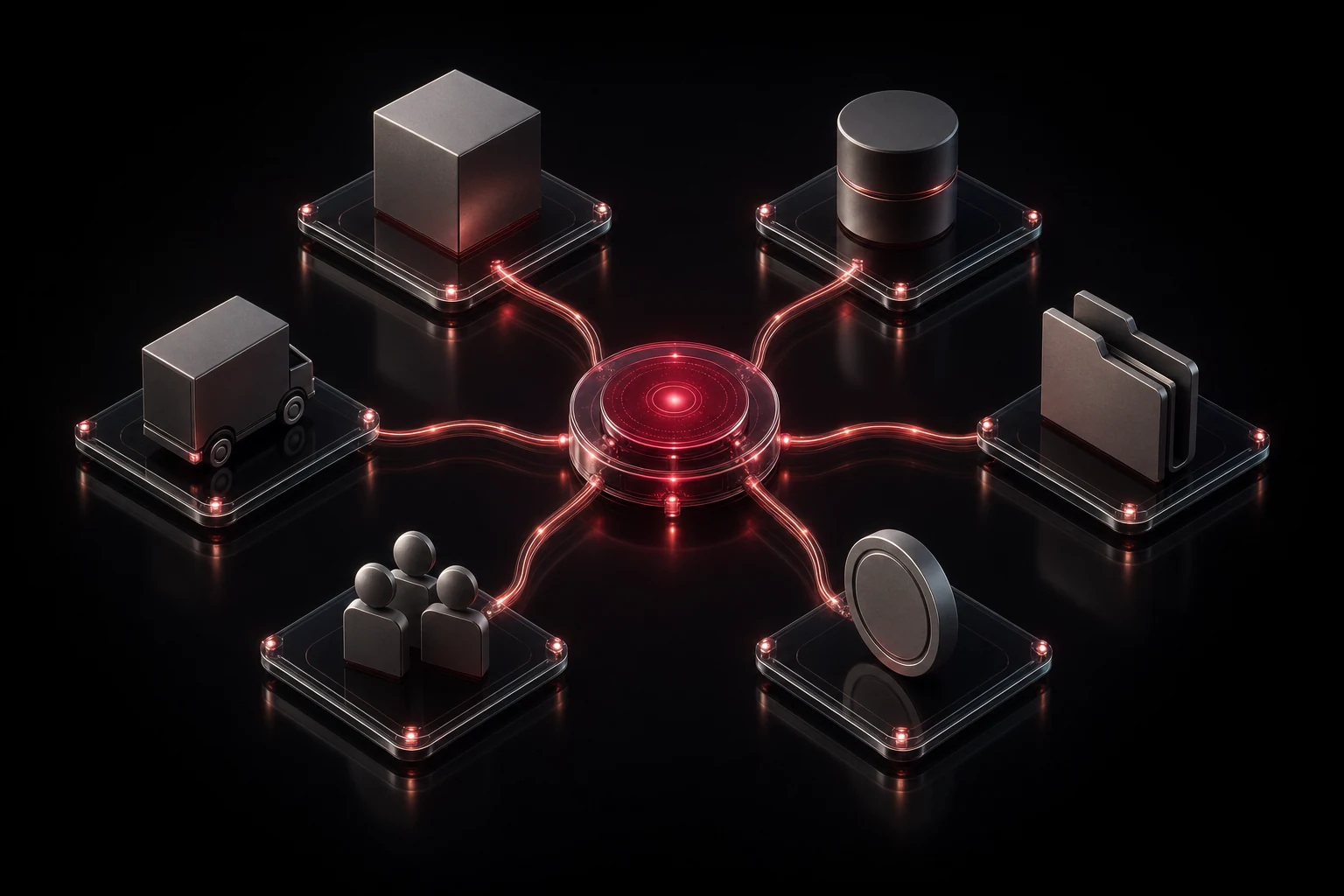
A ministry's residency requirements and a distributor's margin pressure lead to different hosting decisions and different first agents.
FAQ
This consultation decides what to build and whether it is worth building — use-case selection, risk design, guardrails and a roadmap. AI Agents Development is the engineering that follows. Many clients take the consultation and hand the roadmap to their own team, which is a legitimate outcome.
No. We are model-agnostic and routinely design for private, self-hosted open-weight models where residency or sovereignty requires it. Where a commercial API is the better fit on capability or cost, the retrieval layer still controls exactly what leaves your environment, and that boundary is documented.
Agents inherit role-based access control and least privilege, tool access is scoped per action rather than granted as a blanket credential, consequential steps pause for human approval, and guardrails run both before an action is attempted and after it returns. Refusal is designed in as a valid outcome.
The engagements that succeed remove assembly and coordination work, not judgement. We will tell you plainly which tasks in your shortlist are pure headcount substitution, because those are usually the ones that fail on exception handling and generate the most internal resistance.
We look for high-volume, document-heavy work with a clear owner and a tolerable failure mode. Finance reconciliation preparation and HR policy answering are common first agents for exactly that reason — high relief, contained consequence, obvious success measure.
Then integration is the easier half of the problem. Agents reach existing systems through their APIs and the Model Context Protocol; nothing needs to be replaced to put an agent in front of it. Where a system genuinely cannot expose what is needed, that becomes an Application Modernization conversation instead of a workaround.
Get started
Pick a single narrow job that eats your team's week. We will scope it, define the guardrails, and tell you honestly whether an agent is the right answer for it.
Chat with us on WhatsApp
Pick the team you need — we'll open the chat.
Ask Teky Bot
AI-assisted · replies may contain mistakes
Please don't share passwords or personal data. AI processes your messages. See our Privacy Policy.
We set no cookies of our own and run no trackers — just two on-device preferences (theme, this notice). The Google Map on our Contact page can set Google's. Details in our Cookie Policy and Privacy Policy.